

Qualify a silicone supplier by treating samples and records as one approval package: define the intended use and market, write the sample plan before testing, separate material evidence from process control and finished-goods validation, and approve only when the quality records show that repeatable production can meet the agreed requirements.

Build the supplier qualification gates before reviewing samples
A practical silicone supplier qualification process starts by defining requirements, reviewing supplier evidence, checking risk, recording commitments and continuing evaluation after the first order.
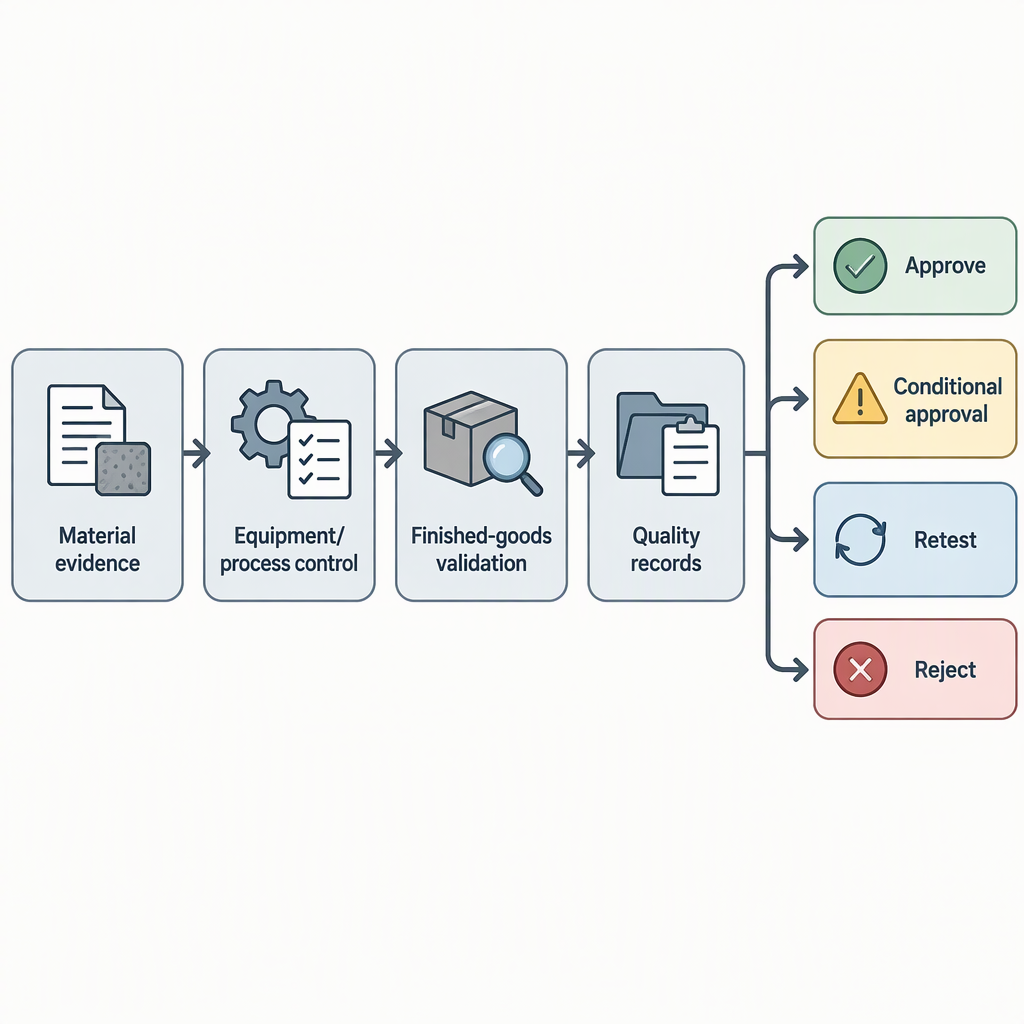
| Gate | What the buyer should decide | Minimum evidence to request |
|---|---|---|
| Intended-use gate | Confirm whether the product will contact food, skin, heat, liquids or repeated cleaning, because food-contact materials can affect safety, taste, smell, appearance and quality. | Market, use scenario, product drawing, material declaration and applicable food-contact scope. |
| Material gate | Check that the material choice is suitable for the intended effect and does not rely on a vague “food-grade” label alone. | Material grade identification, supplier declaration, regulatory basis and test reports matched to the product use. |
| Process gate | Confirm that manufacturing is controlled through documented quality assurance and quality control practices. | Control plan, inspection records, traceability records and change-control procedure. |
| Commercial approval gate | Approve, continue conditionally, retest or reject based on documented evidence rather than sales claims. | Signed requirements, agreed acceptance criteria, supplier commitments and retained evaluation records. |
Write the sample plan: quantity, conditions, measurements and decisions
The sample plan should state how many parts will be checked, under which use conditions, which measurements matter and what result will trigger approval, retesting or rejection.
- Define the product use. Record whether the silicone item is kitchenware, tableware, a storage part, a preparation accessory or another consumer product, because food-contact context changes the evidence a buyer should request.
- Set sample coverage before samples arrive. Specify the number of pieces by product risk, material lot, color, tool cavity, surface finish and supplier process stage instead of accepting a universal sample count.
- Write test conditions. Match temperature exposure, contact medium, time, cleaning, bending, compression or aging checks to the real use scenario and to the target-market requirement.
- Choose measurement items. Common buyer-controlled checks include dimensions, weight, hardness, appearance, odor, fit, color consistency, flash, contamination, packaging condition and the test-report items required for the intended food-contact scope.
- Record the decision rule. State in advance whether a failed item means full rejection, supplier corrective action, retest with a new lot or conditional continuation.
Do not let a supplier choose the sample quantity after seeing early results. A defensible plan fixes the sample logic first, then treats any deviation as a documented change.
Verify the silicone material before accepting the sample
Material verification should connect the silicone grade, intended food-contact or consumer use, test evidence and market requirements before the physical sample is accepted.
The European Commission food contact materials page describes food-contact materials as including items used in production, storage, preparation and serving, including kitchenware and tableware.
The European Commission legislation summary states that food-contact materials must not release constituents at levels harmful to health or cause unacceptable changes to food composition, taste or odour.
For the United States, 21 CFR § 177.2600 addresses rubber articles intended for repeated use in food-related production, processing, preparation, packaging, transporting or holding, and its text includes silicone polymer and silicone elastomer categories among listed elastomers.
- Ask for the material identification and confirm that it matches the sample, drawing, bill of materials and quoted production material.
- Request test reports that name the tested material or finished article, test method, laboratory, date, result and applicable market scope.
- Check whether the report scope covers the real product use, such as food preparation, storage, serving, repeated use or heat exposure.
- For U.S. food-related repeated-use applications, ask the supplier or laboratory to explain how the material evidence relates to 21 CFR § 177.2600 without treating that reference as a blanket product approval.
Separate material, equipment and finished-goods validation
A strong qualification package separates what the silicone is, how the supplier controls production and whether the finished goods match the buyer’s use case.
| Verification layer | Buyer question | Useful records | Do not accept as a substitute |
|---|---|---|---|
| Material | Is the starting material suitable for the intended product and market? | Material declaration, lot traceability, test report and supplier specification. | A generic “food-grade silicone” phrase without scope. |
| Equipment and process | Can the supplier manufacture under controlled conditions with documented quality assurance and quality control? | Process parameters, inspection plan, tooling identification and nonconformance records. | A perfect hand-selected sample with no process evidence. |
| Finished goods | Does the shipped product meet the drawing, function, appearance and applicable test scope? | Incoming inspection results, functional checks, dimensional report and final release record. | A raw-material certificate that does not cover the finished article. |
Keep these layers separate in your approval file. If a supplier fails one layer, define the corrective action for that layer instead of reopening every part of the qualification.
Validate finished silicone goods against the use scenario
Finished-goods validation should test the exact article the buyer plans to sell or assemble, not only the raw silicone material.
- Check contact use: direct food contact, indirect food contact, non-food consumer handling, repeated washing, heat exposure or storage.
- Check sensory and safety-relevant concerns for the target market, including unacceptable changes to food taste or odour where food contact is intended.
- Inspect dimensions, flash, parting lines, fit with mating components, surface contamination, color consistency and packaging protection against the approved sample.
- Tie any laboratory test report to the finished article or clearly document when the report covers only the material and must be supplemented by finished-product inspection.
- Keep the signed sample, inspection record, deviation list and buyer disposition so later orders can be compared with the approved baseline.
Request quality records that prove repeatability
Quality records should show that the supplier can repeat the approved result through controlled manufacturing, documented quality assurance and documented quality control.
- Approved drawing, specification, sample version and change history.
- Material lot records, incoming inspection records and batch traceability.
- Mould or tooling identification, process-control record and in-process inspection results.
- Final inspection report, packaging inspection, release record and nonconformance disposition.
- Supplier commitment record, agreed corrective-action timing and ongoing evaluation notes.
For EU food-contact-oriented products, GMP expectations include well-controlled manufacturing, documented quality assurance and quality control systems, and suitable starting materials.
For supplier management, a risk-based file should keep the requirement definition, supplier commitment, agreement records and ongoing evaluation evidence together.
Use a decision table to approve, retest or reject
The final decision should be documented as approve, conditional approval, retest or reject, with the reason tied to sample results and records.
| Result | When it fits | Buyer action |
|---|---|---|
| Approve | Samples meet the written specification, finished-goods checks pass and the supplier provides matching quality records. | Release the supplier for the defined product, material, process and market scope only. |
| Conditional approval | Minor gaps remain, but risk is controlled and the supplier commits to documented corrective action. | Limit order scope, define due dates and require evidence before scaling volume. |
| Retest | A result conflicts with the specification, report scope is unclear or a process change affects the approved sample. | Request new samples from the correct lot or process and repeat the agreed checks. |
| Reject | The material basis, finished-goods performance or quality-control evidence does not support the intended use. | Record the reason, close the evaluation or restart only after a new qualification package is submitted. |
Control changes after the first approved sample
Supplier qualification does not end with one good sample; keep change control and ongoing evaluation records for each approved silicone product.
- Freeze the approved baseline. Keep the approved sample, drawing revision, material reference, test report and quality-record set together.
- Require change notice. Ask for notice before changes to material, pigment, tooling, process, inspection plan, packaging or production site affect the approved article.
- Recheck the affected layer. A material change may need material evidence; a mould change may need dimensional and appearance checks; a process change may need process records.
- Review performance after purchase. Track incoming inspection results, complaints, corrective actions and repeated deviations as part of continued supplier evaluation.
Conclusion
The final rule is simple: do not qualify a silicone supplier because one sample looks acceptable; qualify the supplier when the sample plan, material evidence, process controls, finished-goods validation and quality records all support the same intended use.
For silicone supplier qualification, the strongest purchasing file is the one another buyer or auditor can follow later: requirement, sample set, test conditions, measurements, decision rule, supplier commitment and ongoing control records.
FAQs about silicone supplier qualification
The most common qualification questions are about sample counts, “food-grade” claims, report scope, retesting and which records should remain in the supplier file.
How many silicone samples are enough for supplier qualification?
There is no universal number. Set the quantity by product risk, material lot, color, tool cavity, use condition and buyer acceptance criteria, then document why that coverage is enough for the intended approval scope.
Is a “food-grade silicone” statement enough?
No. For food-contact consumer goods, the buyer should connect the statement to the intended article, use condition, market requirement and supporting test or compliance evidence.
Should raw-material reports replace finished-goods validation?
No. Raw-material evidence helps verify the material, but finished goods still need inspection against the drawing, function, appearance, packaging and applicable test scope.
What if the supplier sends a test report for a different product?
Treat it as incomplete until the supplier explains the relationship to the submitted sample and provides evidence that matches the material, article or intended use being qualified.
When should a buyer retest silicone samples?
Retest when the material, pigment, tooling, process, report scope or finished-goods result changes enough to affect the approved use or the original decision rule.
Which records should remain in the approved-supplier file?
Keep the requirement definition, approved sample record, material evidence, inspection results, supplier commitments, corrective actions and ongoing evaluation notes together.
Can one approval cover every market?
Usually no. Market scope matters because food-contact rules and documentation expectations differ, so buyers should define the target market before accepting reports or supplier declarations.


